

A heated pool changes everything about how much you use it. In Arizona, where the swim season is already long, the right heater can stretch it to nearly year-round, turning chilly spring mornings and cool fall evenings into perfectly comfortable swim time. But the question of how to heat your pool, gas or electric, trips up a lot of homeowners.
The truth is, there’s no single right answer. The best choice depends on your pool, your climate within Arizona, how you use the pool, and what you’re trying to get out of it. Rather than declaring a universal winner, this guide walks you through how to match the decision to your specific situation. (If you want the detailed technical head-to-head, our gas vs. electric pool heater comparison for Arizona breaks down the specs side by side.)
First, Understand the Basic Difference
Before matching a heater to your needs, it helps to understand what each type does well.
A gas pool heater burns natural gas or propane to heat water quickly. Its defining strengths are speed and power: it can raise water temperature quickly, regardless of the outside air temperature. This makes it well-suited to heating a pool quickly on demand or heating spas when you want hot water in a hurry.
An electric heat pump, which is what “electric heater” usually means for pools, works differently. It pulls heat from the surrounding air and transfers it to the water, using electricity to move heat rather than generating it directly. It’s far more energy-efficient to operate, but it heats more slowly and depends on warm ambient air to work effectively.
That core difference, fast and powerful versus efficient and gradual, drives almost every other consideration.
Match the Choice to How You Use Your Pool
The single most useful question to ask is: how do you actually want to use your heated pool?
If you want to heat the pool quickly and only occasionally, say, to warm it up for a weekend when guests are coming, gas makes a lot of sense. It delivers heat fast and doesn’t care whether it’s a warm afternoon or a cool morning. The trade-off is a higher operating cost per hour of use.
If you want to maintain a comfortable temperature consistently throughout the long swim season, an electric heat pump often wins out. Its efficiency means lower operating costs, and Arizona’s warm air for much of the year is exactly the condition heat pumps need to perform well. The trade-off is slower heating and reduced effectiveness on the coldest days.
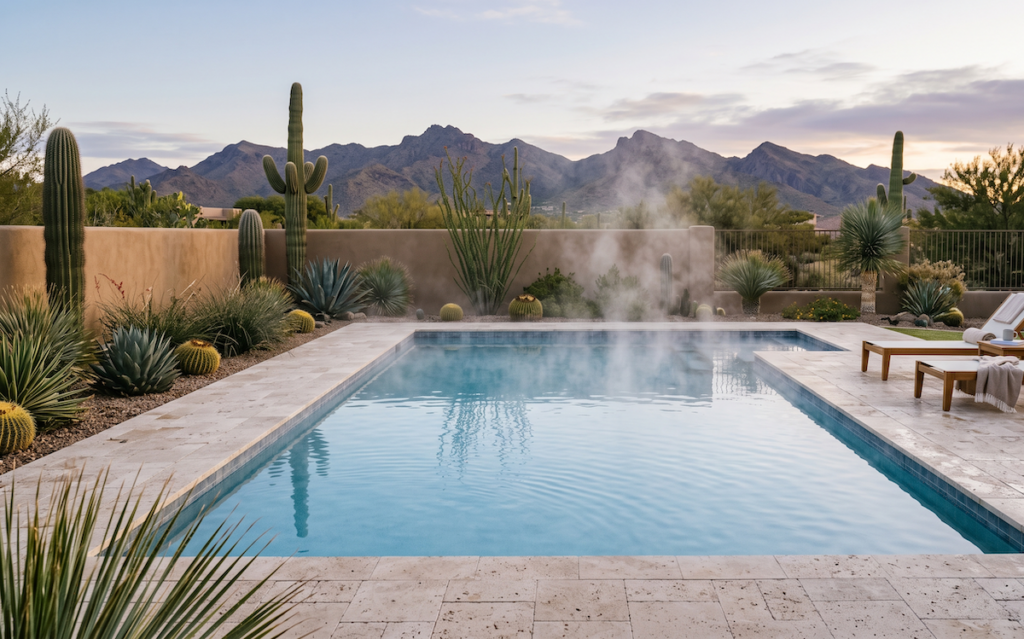
Consider Arizona’s Climate Advantage
Here’s where Arizona tilts the math in a particular direction for many homeowners. Electric heat pumps depend on warm ambient air to operate efficiently, and Arizona supplies plenty of it. For much of the year, the warm air that defines our climate is exactly what makes a heat pump cost-effective to run.
This is why heat pumps have become a popular choice for Arizona pools that get used regularly. The conditions that make our summers intense are the same ones that let a heat pump sip energy while keeping the water comfortable. On the relatively few genuinely cold days, performance dips, but those days are limited here compared to most of the country.
Gas still holds the edge when you need rapid, on-demand heat or you’re heating a spa, regardless of the season. Many homeowners with both a pool and an attached spa find value in a setup that accommodates both needs.
Weigh Upfront Cost Against Operating Cost
The financial picture has two halves, and looking at only one leads to the wrong decision.
Gas heaters generally have a lower upfront equipment cost but higher operating costs, since you pay for fuel each time you heat. Electric heat pumps typically cost more upfront but are markedly cheaper to operate over time thanks to their efficiency.
This means the right answer partly depends on your time horizon and usage. A homeowner who heats often and plans to stay in the home for years may find the heat pump’s lower running costs more than offset its higher purchase price. Someone who heats rarely and wants minimal upfront investment may prefer gas. There’s no substitute for running the numbers against your actual expected usage.
For homeowners weighing the investment, energy efficiency also has long-term value, and federal resources like the U.S. Department of Energy’s guidance on swimming pool heating serve as a useful, neutral reference for comparing the efficiency of different systems.
Don’t Forget Sizing and Installation
Whichever type you choose, proper sizing determines whether the system actually performs. A heater that’s undersized for your pool’s volume will struggle to reach and hold your target temperature, running constantly and costing more. An oversized unit wastes money on the front end.
Proper sizing accounts for your pool’s volume, surface area, your target temperature, and how exposed the pool is to wind and evaporation. This is genuinely a job for an experienced professional, not a guess based on a chart. Installation matters too: gas heaters require proper gas lines and venting, while heat pumps need adequate electrical capacity and airflow clearance.
This is also a good time to consider a pool cover, regardless of the heater type. A cover dramatically reduces heat loss from evaporation, which means whatever heater you choose works less and costs less to run.
Making Your Decision
For most Arizona homeowners who want to maintain a comfortable pool across the long swim season, an electric heat pump’s efficiency and our warm climate make a strong combination. For those who want fast, on-demand heat or are heating a spa, gas still has its advantages. And for some, a setup that addresses both needs is the right answer.
The best decision comes from matching the equipment to your actual usage, your pool, and your budget, covering both upfront and operating costs. At Arrowhead Deck and Pools, we’ve been helping Scottsdale and Phoenix homeowners with pool equipment since 2008. We’ll size and recommend a system based on how you actually plan to use your pool. Request a Free Estimate, and we’ll walk you through the right option for your setup.
Related Resources
Frequently Asked Questions
Is a gas or electric pool heater better in Arizona?
It depends on how you use your pool. Electric heat pumps are highly efficient and perform well in Arizona’s warm climate, making them a strong choice for maintaining a comfortable temperature throughout the long summer season. Gas heaters heat faster and on demand, regardless of the weather, which makes them ideal for occasional heating and spas. The right choice matches your usage and budget.
Are electric heat pumps cheaper to run than gas pool heaters?
Generally yes. Electric heat pumps move heat rather than generate it, making them significantly more energy-efficient to operate than gas heaters. They typically cost more upfront but less to run over time. In Arizona’s warm climate, where heat pumps perform well, the operating savings can be substantial for homeowners who heat regularly.
How fast does each type of pool heater warm the water?
Gas heaters heat quickly and can raise water temperature regardless of outside air temperature, making them ideal when you want warm water fast. Electric heat pumps heat more gradually and work best when ambient air is warm, so they suit maintaining a steady temperature over time rather than rapid on-demand heating.
What size pool heater do I need?
Correct sizing depends on your pool’s volume and surface area, your target water temperature, and how exposed the pool is to wind and evaporation. An undersized heater struggles to hold temperature while an oversized one wastes money. A professional assessment of your specific pool is the reliable way to determine the right size.