

Concrete pricing isn’t one-size-fits-all. The final cost depends on site access, demolition/removal, grading and prep, slab thickness and strength (PSI), reinforcement, and any decorative upgrades like color, stamp, or overlays. Ready-mix concrete pricing also varies by region, and delivery costs can increase for projects outside metro areas.
If you’re budgeting a patio, walkway, driveway, or pool deck, the best starting point is a local quote but understanding the variables below will help you compare bids and avoid surprises.
Limited access is one of the biggest hidden cost drivers. If crews can’t get equipment into the backyard, labor and logistics increase.
Common access scenarios that affect cost:
Special equipment that may be needed:
Tip: If excavated material can remain on-site (when appropriate), it can reduce or eliminate dump fees.
Concrete is only as good as what it’s poured on. Prep often includes removing old concrete, hauling debris, leveling, and building a stable base.
Cost factors here include:
A standard slab for light foot traffic is often 4″ thick, but thicker slabs and higher-strength mixes cost more.
If your slab will support heavier loads (driveway, RV parking, equipment pads), expect thickness and PSI requirements to increase.
Reinforcement may or may not be necessary depending on how the concrete will be used.
Common reinforcement options:
For a standard walkway or light-use patio, reinforcement may not be necessary or recommended. For load-bearing areas, reinforcement helps reduce cracking and improves performance under weight.
A basic finish is typically the most affordable, while decorative upgrades can significantly raise the price.
Standard finishes (often minimal cost impact):
Decorative upgrades (typically higher cost):
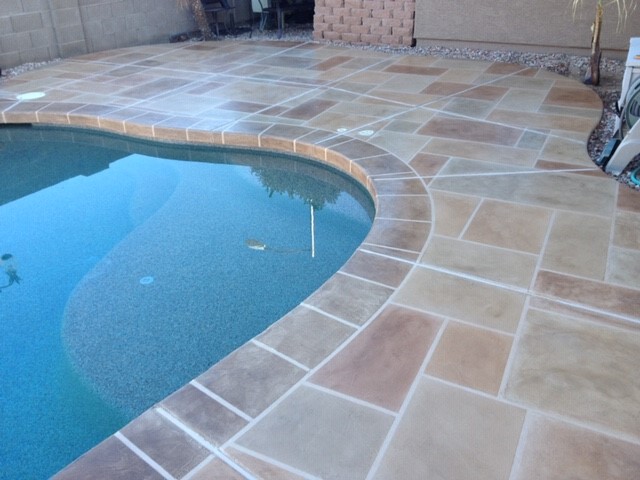
Decorative concrete is a popular option for homeowners who want a high-end look without the cost of natural stone. Stains and overlays can create the look of flagstone, marble, or tile at a fraction of the price.
Pricing varies based on access, prep, and finishes; these ranges are commonly used for budgeting.
The fastest way to get an accurate number is through a site evaluation, because access, demolition needs, and drainage requirements can’t be reliably estimated from photos alone.
For additional information, tips, and design ideas, contact Arrowhead Deck & Pools.
Most price differences come from prep work (demo, base, grading), access limitations, thickness/PSI requirements, and finishes. Two slabs of the same size can have very different labor and material requirements.
Not always. Light foot-traffic areas may not require reinforcement. Reinforcement is more common for driveways, heavy-load pads, or areas prone to movement. Your contractor should recommend what fits your use case.
If you want a more custom look without paying for natural stone or pavers, decorative concrete can be a great value. Just remember: stamps, color, stains, and overlays add labor and materials, so costs rise accordingly.
Access and site prep. Tight gates, no equipment access, hauling dirt/debris, and correcting slope/drainage can add cost quickly, often more than the concrete itself in challenging yards.
Website: https://arrowheaddeck.com/
Email: solutions@arrowheaddeck.com
Phone: +18558332525