

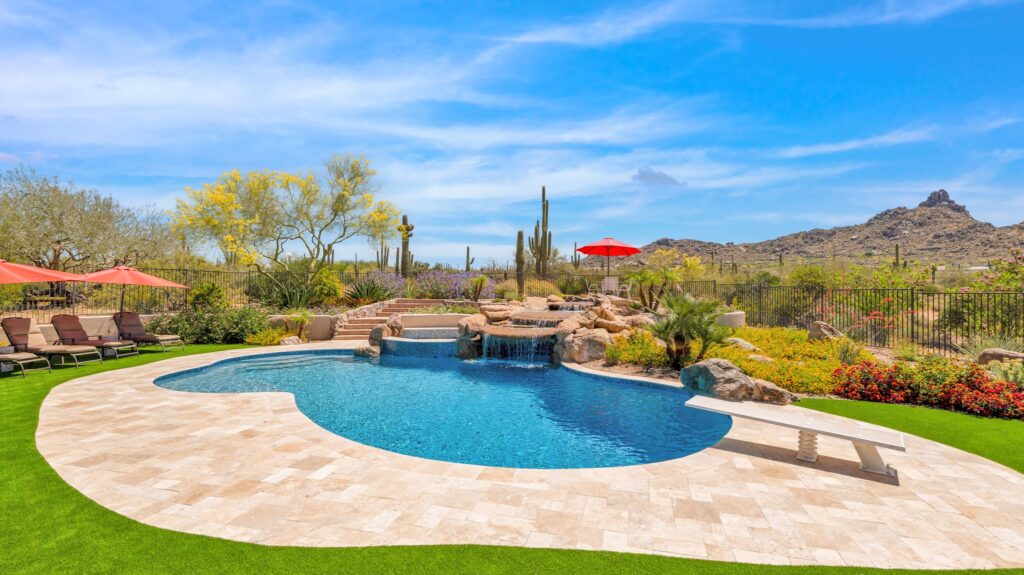
A few quick steps to your own oasis!
Building a pool in your backyard can completely change how you use your outdoor space, especially in Arizona, where outdoor living is part of daily life for much of the year. Whether you want a resort-style retreat, a family-friendly pool, or a clean modern design, the best outcomes start with a clear process and the right team.
This guide breaks down the pool construction process from design through start-up, along with budget considerations, safety tips, and common questions homeowners ask before building.
Key Steps in Building a Pool
Design, Layout, Engineering, and Permits
Every great pool starts with a plan. During the design phase, you’ll choose the pool’s shape, size, depth, and key features, such as a Baja shelf, spa, benches, steps, lighting, and water features. This is also where we evaluate your yard’s layout, access points, sun exposure, drainage, utilities, and how the pool will connect to your deck, patio, or outdoor kitchen.
Next comes engineering. Structural plans help ensure the pool is built to handle your soil conditions, slope, and long-term stress from water pressure and ground movement. In places like Phoenix, this step matters because desert soil, heat expansion, and drainage can affect performance over time.
Finally, permits are pulled through your city and/or HOA (if applicable). This typically includes setback compliance, barrier requirements, and inspections. Getting this right early prevents costly delays later.
Excavation Work
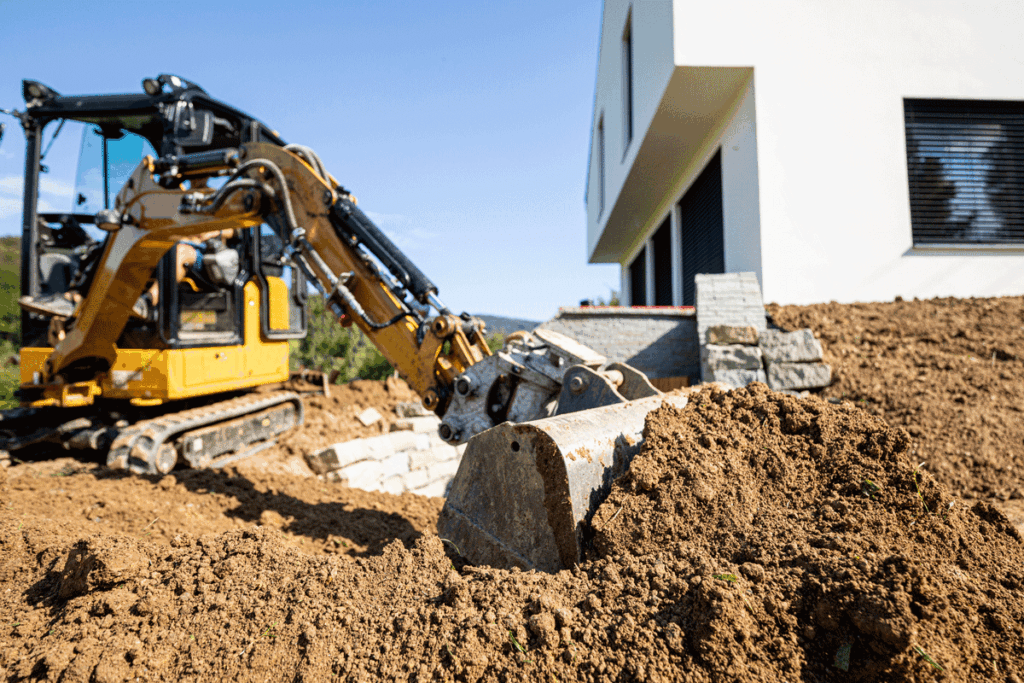
After permits are approved and the layout is marked, excavation begins. This stage uses heavy equipment to dig the pool’s exact footprint and depth based on the design plan. Precision is critical here; proper excavation impacts everything that follows, including structural strength, plumbing placement, and the final look of the pool.
Excavation may also involve:
- Removing rock or hard soil
- Hauling dirt off-site
- Preparing trenches for plumbing and electrical
- Planning for drainage and deck elevation
A clean excavation sets the foundation for a smooth build.
Steel Frame
Once the hole is shaped, a steel rebar cage is installed. This “skeleton” is what gives a gunite/shotcrete pool its strength and durability. Rebar placement, spacing, and tie-ins are engineered to help resist cracking and movement.
Steel reinforcement is especially important in hot climates, where temperature swings and soil expansion can put stress on concrete structures over time.
Plumbing, Gas, and Electrical
This is the behind-the-scenes stage that determines how well your pool runs day-to-day. Plumbing lines are installed for circulation, filtration, skimmers, main drains (as required), returns, and any water features.
Electrical work includes:
- Pool lights (LED options are popular for efficiency)
- Equipment wiring and bonding
- Automation controls (app-based systems)
- Code-compliant safety requirements
If you’re adding a heater, fire features, or an outdoor kitchen tie-in, gas lines are installed during this phase as well. Doing this correctly ensures strong water flow, efficient heating, and reliable performance.
Sprayed Concrete Shell (Gunite/Shotcrete)
Next, the pool shell is formed with sprayed concrete commonly known as gunite or shotcrete. This creates the pool’s complex structure. The concrete is applied over the steel framework to form the walls, floor, steps, benches, and any custom shapes.
After application, the shell must cure properly. Curing helps the concrete strengthen and reduces the risk of surface issues later. This step is one of the most important parts of building a long-lasting pool.
Surrounding Tiles and Decking
Once the shell is ready, tile and coping are installed. Waterline tile adds style while protecting the pool edge from staining and wear. Coping creates a finished transition between the pool and deck.
Then the decking begins. This is where you can customize the entire backyard experience, choosing materials that look great, stay cooler underfoot, and hold up to sun exposure.
Popular pool deck options include:
- Cool deck coatings
- Stamped or brushed concrete
- Pavers
- Natural stone finishes
Decking is also where we ensure proper slope for drainage so water flows away from the pool and home.
Pool Interior and Finish
Now the pool gets its final interior surface. This is what you see and feel when you’re in the water. Common finishes include:
- Plaster: smooth and classic
- Pebble/aggregate finishes: durable, textured, and premium
- Tile: high-end, customizable look
Your finish choice affects not just appearance, but also maintenance, longevity, and how the water color reads in different light.
Pool Start-Up and Inspection
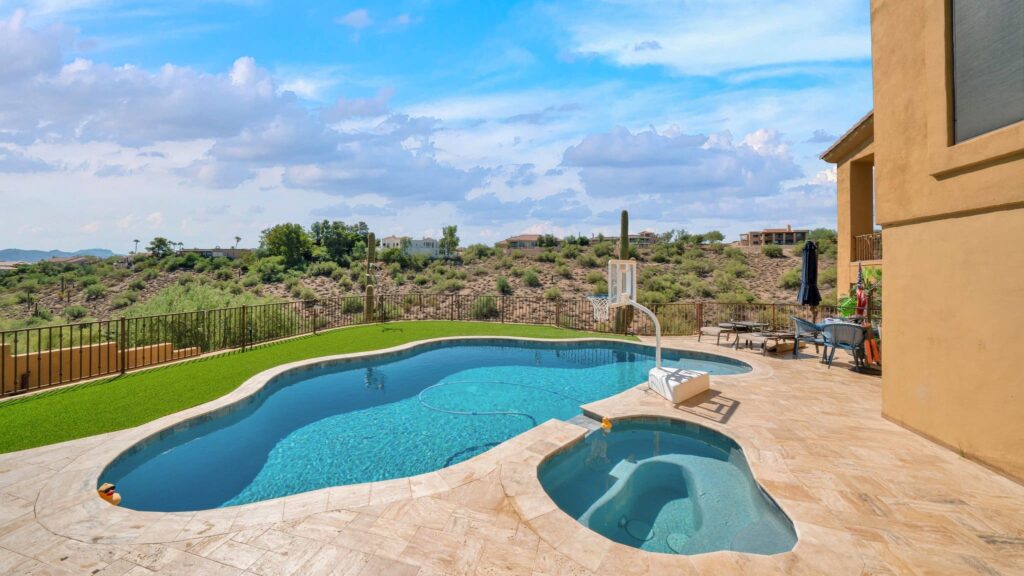
Before swimming begins, the pool goes through start-up and final checks. This includes:
- Filling the pool with water
- Starting circulation and filtration systems
- Balancing chemicals for the new interior finish
- Confirming lights, pumps, heaters, and automation work correctly
- Final inspections where required
Start-up is also when you’ll learn the basics of pool care (or how to use a service), so your water stays clean, safe, and comfortable.
Final Deck Coating
Once construction is complete, the deck receives its final coating or sealing (depending on material). This step improves durability, enhances traction for safety, and gives the surrounding area a polished, finished look.
In hot climates, many homeowners choose finishes designed to help reduce heat buildup and provide a more comfortable walking surface.
Landscaping Work
The final stage ties everything together. Landscaping creates privacy, softens hard edges, and turns the space into a cohesive outdoor retreat.
This may include:
- Plants and trees selected for your climate
- Lighting for pathways and entertaining
- Turf, gravel, or garden beds
- Seating areas, shade structures, or outdoor furniture zones
A well-designed landscape plan makes the pool feel intentional, not just “installed.”
Budget Considerations
Initial Cost Estimates
Pool costs depend on size, complexity, yard access, materials, and features. Here’s a rough estimate by stage:
- Design and Permits: $5,000 – $10,000
- Excavation and Steel Frame: $15,000 – $25,000
- Plumbing and Electrical: $10,000 – $15,000
- Concrete Shell and Finishing: $30,000 – $50,000
- Tiles, Decking, and Landscaping: $10,000 – $25,000
Tip: Custom features like spas, water features, high-end tile, automation systems, heaters, and upgraded deck materials can shift the budget significantly.
Hidden Costs
Even with a solid estimate, some costs can surprise homeowners. Common add-ons include:
- Permit and inspection fees
- Access challenges (tight yards, extra hauling, rock removal)
- Upgraded finishes (tile, pebble, specialty plaster)
- Additional decking or drainage work
- Pool maintenance equipment and accessories
- Extra features like fire bowls, fountains, or specialty lighting
Planning for a “buffer” helps you stay comfortable throughout the build.
Financing Options
If you prefer not to pay everything upfront, financing can help you move forward while spreading cost over time. Options may include:
- Home improvement loans
- Home equity loans or HELOCs
- Contractor financing (when available)
The right option depends on your goals, timeline, and overall home renovation plans.
Return on Investment
A professionally built pool can boost lifestyle value immediately and may add resale appeal, especially in warm climates where outdoor living is a major selling point. ROI depends on your neighborhood, pool design quality, maintenance, and overall backyard presentation.
A pool that looks integrated with the home and outdoor space tends to perform best.
Safety Precautions
Secure Construction Areas
During construction, keep the site fenced and closed off. Pools require heavy equipment, open excavations, and materials that can be hazardous, especially for kids and pets.
Install Fencing and Barriers
Permanent safety features are essential once the pool is finished. Depending on local codes, this may include:
- Perimeter fencing and self-closing gates
- Door alarms or safety locks
- Pool covers (where appropriate)
Keeping barriers maintained and functional is one of the most important long-term safety habits.
Keep Children and Pets Away
Even when construction crews are not on-site, the area can remain dangerous. Make sure children and pets cannot access the yard unsupervised throughout the project.
Communicate with the Construction Team
Clear communication prevents misunderstandings, keeps timelines on track, and helps you feel confident throughout the build. Ask for updates on key milestones like excavation, steel, plumbing, shell, tile, decking, and start-up.
Ready to Build Your Pool?
Building a pool is a major investment, but with the right plan and experienced builders, it becomes a smooth, exciting process that adds years of enjoyment and long-term value.
Ready to take the plunge? Book an appointment with one of our pool construction experts to start designing your dream pool today.
FAQs
1) How long does it take to build a backyard pool?
Most pool builds take several weeks to a few months, depending on design complexity, permitting timelines, inspections, weather, and material availability. Custom features (spas, water features, detailed tile, complex decking) can extend the timeline.
2) What type of pool is best for Arizona heat?
Many homeowners choose gunite/shotcrete pools because they’re durable, customizable, and well-suited for long-term use in hot climates. Deck material selection also matters; cooler, slip-resistant surfaces can make a big difference in comfort.
3) Do I need a permit to build a pool?
In most areas, yes. Pool permits and safety barrier requirements are typically mandated by the city/county and may also be required by an HOA. A professional builder usually handles permitting as part of the process.
4) How much does pool maintenance cost per month?
Monthly costs vary based on pool size, equipment, chemical use, and whether you self-maintain or hire a service. Typical expenses include chemicals, electricity for pumps/filters, and occasional equipment servicing.
About the Author
Website: https://arrowheaddeck.com/
Email: solutions@arrowheaddeck.com
Phone: +18558332525