

Pool resurfacing is one of the most common renovation projects in Phoenix and Scottsdale, and one of the most frequently misunderstood. Homeowners know the pool needs a new interior, but the process itself raises questions. What exactly happens? How long does it take?
What do I need to do during and after?
Understanding each phase of a professional pool resurface helps you evaluate contractors accurately, know what quality work looks like, and avoid being surprised when the project starts. This guide walks through the full process from drain to swim-ready.
Phase 1: Draining the Pool
Pool resurfacing in Arizona begins with a complete drain. An empty pool is subject to hydrostatic pressure from surrounding soil, particularly after monsoon rains.
Professional contractors open the hydrostatic relief valve in the main drain to allow groundwater pressure to equalize against the shell rather than build beneath it. Skipping this step can cause the shell to shift or, in more severe cases, lift.
Drain water in Phoenix and Scottsdale must go to the sanitary sewer through a designated cleanout, not to the street or storm drain system. A contractor who handles this incorrectly creates a compliance issue for the homeowner.
Phase 2: Surface Preparation
This is the most critical phase of any Arizona pool resurface and the one most frequently cut short by contractors competing on price. The existing interior finish must be mechanically removed down to the bare shell, typically by chipping, grinding, or sandblasting.
The work is loud, generates substantial debris, and takes two to four days for a standard residential pool.
The quality of this preparation determines how well the new finish bonds and how long it lasts. A finish applied over residual old plaster, scale deposits, or surface contamination cannot bond fully to the shell.
The result is delamination, where sections separate from the shell within one to three years. If your contractor completes prep in a few hours, ask questions.
Phase 3: Crack Repair and Upgrades
With the pool empty and the shell exposed, this is the right time to address any underlying issues before the new interior goes on. Shell cracks are repaired with hydraulic or epoxy-based materials appropriate for the crack depth.
Pool lights are typically replaced at this stage since the pool is already drained. Waterline tile, coping, and main drain covers can be inspected and updated. Equipment replacements are coordinated during this window as well.
Combining these items with a resurface is almost always more cost-effective than scheduling them separately. Our Pool Resurfacing Phoenix page explains what is typically included and how we approach scope decisions.
Phase 4: Applying the New Interior Finish
For plaster, an experienced crew applies the material by hand, troweling it evenly across the entire shell surface within a specific time window to maintain consistency.
For pebble and aggregate finishes, the process involves applying a base coat followed by the aggregate material, which is then exposed and finished to the desired texture.
Pebble finishes require more skilled application than plaster. Uneven aggregate exposure is visible and difficult to correct after the fact. The material, the crew’s experience, and the conditions on the day of application all affect the quality of the finished surface.
Phase 5: Fill and Startup Chemistry
The pool begins filling immediately after application. A fresh plaster surface must not dry out before it cures in contact with water. Most Phoenix residential pools take 12 to 24 hours to fill.
Startup chemistry management is critical and continues for the first two to four weeks. The water chemistry conditions during this curing period directly determine how hard and durable the finished surface becomes.
Incorrect startup chemistry can permanently compromise the surface’s density and stain resistance. A reputable Arizona pool contractor will either manage startup directly or provide a specific protocol and follow up during the process.
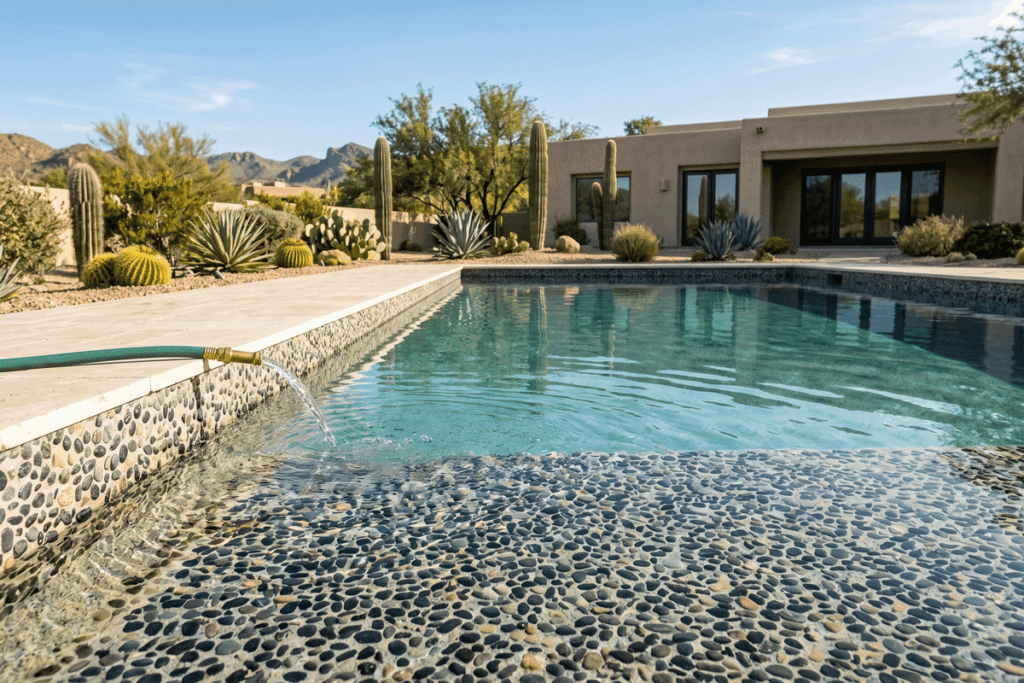
Phase 6: Curing and Return to Normal Use
New plaster requires approximately 28 days to fully cure. Automatic pool cleaners are kept out for three to four weeks to avoid marking the soft surface. Light swimming is generally possible within a few days of fill, once chemistry has stabilized.
You will likely notice some blotchiness or color variation during the first few weeks. This is normal and typically evens out as the surface hardens.
Following the startup protocol carefully during this period is one of the most important things a homeowner can do to protect their investment in a new interior finish.
What a Quality Pool Resurface Looks Like
A well-executed Arizona pool resurface produces an interior that is uniform in color and texture, properly bonded to the shell, and free from visible lap marks or inconsistencies. Chemistry should stabilize within a week or two of startup.
Early warning signs of a quality problem include hollow-sounding areas when the surface is tapped, visible inconsistencies in the finish, or chemistry that will not balance normally in the first few weeks after fill.
At Arrowhead Deck and Pools, we have been resurfacing pools in Phoenix and Scottsdale since 2008. If you are planning a resurface or want to understand what the process involves for your specific pool, Request a Free Estimate and we will walk you through it.
Choosing the Right Pool Resurfacing Contractor in Phoenix
The quality of a pool resurface is largely invisible once the pool is full of water. The critical work, thorough preparation, appropriate crack repair, proper material application, and managed startup, happens before the homeowner can verify it visually.
This makes contractor selection the most consequential decision in the entire project.
When evaluating pool resurfacing contractors in Phoenix, ask specifically about their prep methodology, how long they typically spend on preparation for a pool your size, what crack repair protocol they use, which specific finish materials they are proposing by name, and what startup support they provide.
A contractor who answers these questions specifically and confidently is operating to a different standard than one who provides only a total price.
Verify any contractor’s ROC license status at the Arizona Registrar of Contractors website before signing anything. Arrowhead Deck and Pools holds four active ROC licenses covering all pool and outdoor construction work we perform.
Arrowhead Deck and Pools: Phoenix Pool Resurfacing Since 2008
We have been resurfacing pools throughout Phoenix, Scottsdale, Chandler, Tempe, and the greater Maricopa County area since 2008. Every project starts with a thorough on-site estimate that covers every component of the work.
We do not abbreviate preparation, and we are present during the startup period to make sure the new surface cures correctly.
If you are planning a pool resurface and want to understand what the process involves for your specific pool, Request a Free Estimate or call us at (855) 833-2525 to schedule a visit.
Frequently Asked Questions
How long does pool resurfacing take in Phoenix?
Most residential pool resurfaces in Phoenix take 7 to 14 days from drain to swim-ready, depending on prep scope and any additional work. Projects that include tile replacement, equipment updates, or deck work may run two to three weeks total.
How long after pool resurfacing can you swim?
Light swimming is typically possible three to seven days after fill, once water chemistry has stabilized. Automatic cleaners and heavy use should be avoided for the full 30-day curing period.
What causes new pool plaster to fail early?
The most common causes are inadequate surface preparation before application, poor-quality materials or incorrect mix ratios, and incorrect startup chemistry during the curing period. All three are controllable with the right contractor and process.
How much does pool resurfacing cost in Phoenix?
A standard plaster resurface on a residential pool typically starts around $6,000 to $10,000 in the Phoenix market. Pebble finishes, tile work, and equipment changes increase that cost. An on-site estimate from a licensed Arizona contractor is the most accurate way to price your specific pool.
What is the difference between pool replastering and pool resurfacing?
The terms are often used interchangeably. Replastering typically refers specifically to applying a new white or colored plaster finish. Resurfacing is the broader term that includes plaster, pebble, aggregate, and quartz finishes.
Both involve draining the pool, removing the existing interior, and applying a new surface.