

A worn pool deck can make an otherwise nice backyard feel tired. Cracks, faded coating, surfaces that scorch your feet, and a color that screams a different decade. The pool water can be perfect, but if the deck around it looks rough, the whole space feels neglected.
The good news is that a swimming pool deck remodel is one of the highest-impact backyard upgrades you can make, often transforming the look and function of your entire pool area without touching the pool itself. The trickier question is whether your deck needs a refresh, a full replacement, or something in between. Here’s how to think it through, and what it tends to cost.
First, Figure Out What’s Actually Wrong
Before deciding between a refresh and a replacement, you need an honest assessment of your deck’s condition. The right move depends entirely on what’s going on beneath the surface.
Surface-level problems include faded or worn coating, minor hairline cracks, outdated color or texture, and cosmetic wear rather than structural damage. These issues affect how the deck looks and feels, but don’t indicate a failing foundation.
Structural problems are different. Widening cracks, sections that have settled or heaved unevenly, large areas of spalling where the surface is breaking apart, and drainage failures all point to issues with the slab or base beneath the surface. These can’t be solved by a cosmetic refresh alone.
The distinction matters because it determines which path makes sense and what you’ll spend. A professional assessment is worth getting before you commit to an approach, because applying a beautiful new surface over a failing slab means paying to do it again sooner.
When to Refresh: Resurfacing and Overlays
If your deck’s underlying slab is structurally sound and the problems are mostly cosmetic, a refresh is usually the smart, cost-effective choice.
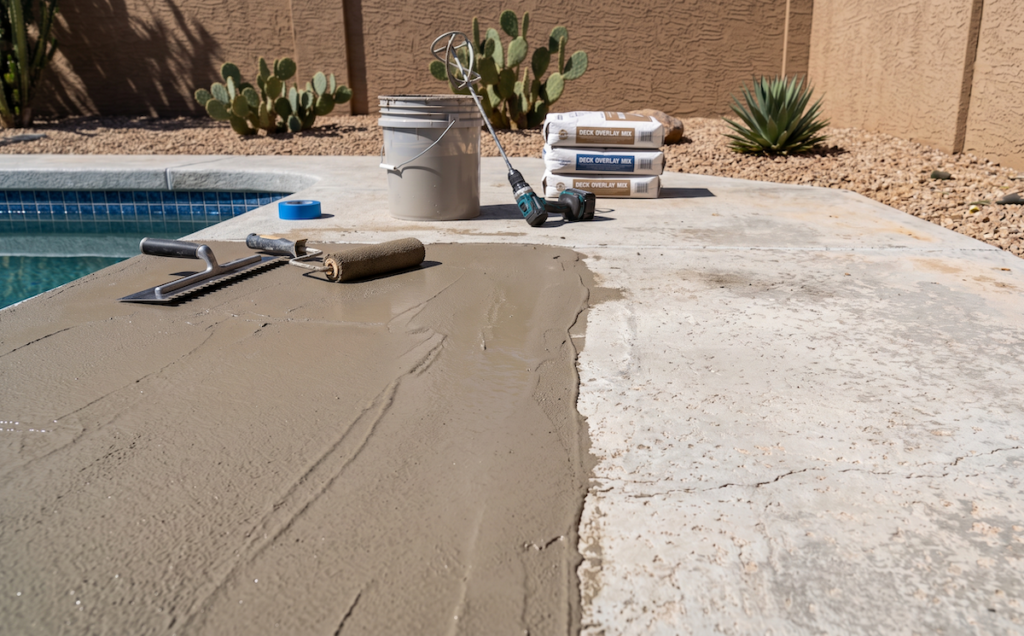
Resurfacing involves applying a new wearable surface over the existing concrete. Concrete overlays, new cool-deck coatings, and similar systems can completely change the appearance and restore a deck’s function without the cost and disruption of tearing everything out. You get a fresh surface, updated color and texture, and renewed heat and slip performance, all built on the existing foundation.
This is often the best value when the slab is in good shape. It costs less, takes less time, and creates far less mess than a full replacement. A quality swimming pool deck remodel through resurfacing can make a dated deck look and perform like new, which is why it’s the route many Scottsdale homeowners take when their deck is worn but fundamentally sound.
When to Replace: Full Tear-Out and Rebuild
Sometimes a refresh isn’t enough. When the underlying slab has failed, full replacement is the path that actually solves the problem.
Replacement makes sense when there’s significant structural cracking, major settling or heaving, a base that wasn’t properly prepared originally, or drainage problems that require regrading and rebuilding. In these cases, the old deck is removed, the base is properly prepared, and a new deck is installed from the ground up.
Replacement costs more and takes longer than resurfacing, but it’s the right call when the foundation is compromised. Putting a new surface over a failing slab is throwing good money after bad, because the underlying problems will telegraph right back through the new surface. Replacement also opens the door to changing the deck’s layout, expanding the usable area, or upgrading to a different material entirely.
What a Pool Deck Remodel Costs
Cost is the question everyone wants answered, and the honest response is that it depends on several factors. Rather than quote numbers that may not fit your situation, here’s what actually drives the price.
The size of your deck is the biggest factor, since most deck work is priced by square footage. The material you choose matters a lot, with basic coatings at the lower end and premium pavers or natural stone like travertine at the higher end. The scope determines cost, too: a straightforward resurfacing of a sound slab is far less than a full tear-out, regrade, and rebuild. Site conditions like access, drainage corrections, and the amount of demolition required all factor in. And any design changes, such as expanding the deck or reconfiguring the layout, add to the total.
Because these variables swing the number so much, the only way to get a figure that actually reflects your project is an on-site assessment and a detailed, itemized estimate. Be cautious of any contractor who quotes a firm price without seeing your deck.
Why the Material Choice Is Critical in Arizona
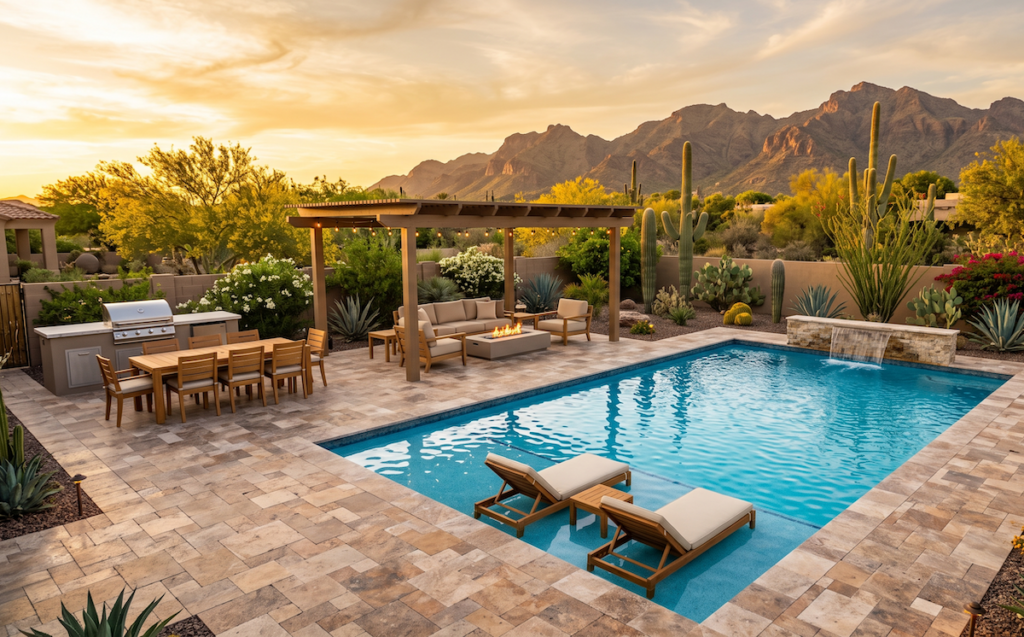
Whatever path you choose, the material decision carries extra weight in the desert. A swimming pool deck remodel is your chance to fix not just the look but the daily livability of your pool area.
Surface temperature is the big one. The difference between a deck you can cross barefoot in July and one that sends you hopping is largely about material and color. Cool deck coatings and lighter-toned surfaces reflect more heat. UV resistance determines how long your new color and finish last before fading. And slip resistance matters for safety around water. A remodel that ignores these realities in favor of looks alone is a missed opportunity.
This is where working with a contractor who genuinely understands Arizona conditions pays off. The right material recommendation balances appearance, comfort, durability, and budget for the specific way you use your space.
Making the Call
If your deck is worn but structurally sound, a refresh through resurfacing is usually the best value. If the slab beneath it has failed, replacement is the path that actually solves the problem. The key is to start with an honest assessment so you invest in the right solution rather than the cheapest one that won’t last.
At Arrowhead Deck and Pools, decking is our specialty, and we’ve been remodeling pool decks across Scottsdale and Phoenix since 2008. We’ll give you a straight assessment of what your deck actually needs, not an upsell. Request a Free Estimate, and we’ll walk you through your options and a detailed cost breakdown.
Related Resources
Frequently Asked Questions
Should I resurface or replace my pool deck?
If the underlying slab is structurally sound and the problems are cosmetic, like faded coating or minor cracks, resurfacing or an overlay is usually the better value. If there’s significant structural cracking, major settling, or drainage failure, full replacement is the path that actually solves the problem. A professional assessment determines which applies to your deck.
How much does a swimming pool deck remodel cost?
Cost depends on deck size, chosen material, scope of work, and site conditions. Resurfacing a sound slab costs considerably less than a full tear-out and rebuild, and premium materials like travertine cost more than basic coatings. An on-site assessment and itemized estimate are the only reliable ways to get a figure for your specific project.
How long does a pool deck remodel take?
A straightforward resurfacing of a sound deck typically takes a few days to about a week, depending on size and the coating system. A full tear-out and replacement takes longer because it includes demolition, base preparation, and new installation. Your contractor should give you a realistic timeline based on your specific scope.
What is the best pool deck surface for Arizona heat?
Cool deck coatings and lighter-colored materials, such as travertine pavers, tend to stay more comfortable underfoot in Arizona’s extreme heat, since lighter tones reflect more heat than dark surfaces. The best choice balances surface temperature, UV resistance, slip resistance, appearance, and budget for how you use your space.