

Pool decking in Phoenix takes more consistent punishment than in almost any other pool market in the country.
Extreme UV exposure, surface temperatures that can exceed 150 degrees Fahrenheit, dramatic day-to-night temperature swings, monsoon-driven soil movement, and the sheer duration of intense seasonal heat create a combination of stressors that most decking materials were not designed to handle.
Understanding what causes deck failure in the Arizona climate, and which materials are engineered to withstand it, helps Phoenix homeowners make choices that hold up over a realistic timeframe rather than requiring constant patching and attention.
Thermal Expansion and Contraction
Phoenix experiences dramatic temperature swings throughout the year. Summer daytime highs exceed 115 degrees Fahrenheit. Winter nights in outlying areas drop into the 30s. The swing between a summer afternoon and a desert evening can be 40 degrees or more within a few hours.
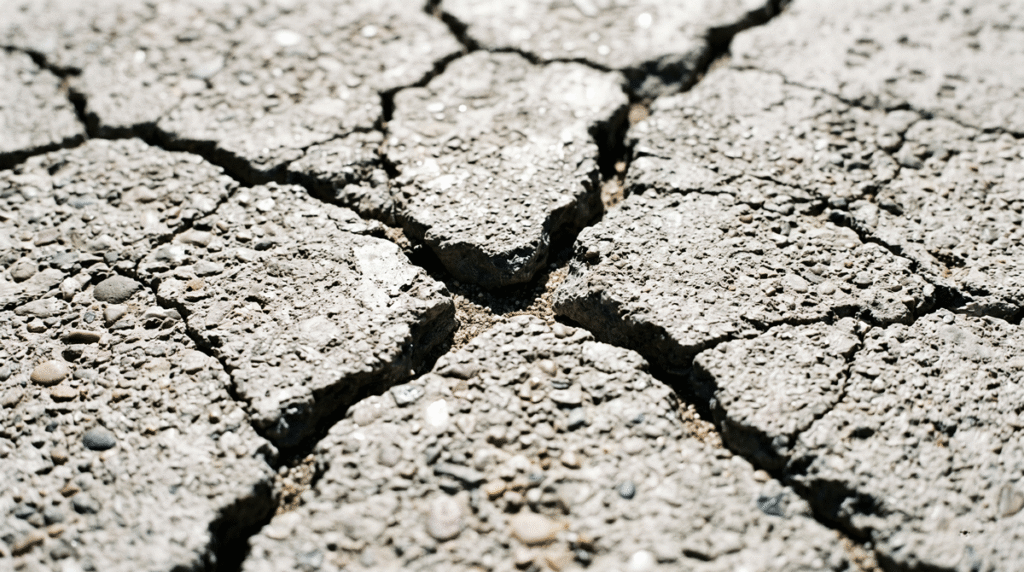
Concrete expands when heated and contracts when cooled. Repeated thermal cycling over years develops micro-fractures that grow into visible surface cracks.
Standard poured concrete without adequate expansion joint spacing, or without additives formulated for thermal movement, is particularly vulnerable.
The cracking Phoenix pool owners attribute to age is frequently the result of thermal cycling on concrete that was not engineered for this climate.
UV Degradation
Arizona’s UV index is among the highest in North America year-round. Sustained UV exposure breaks down the surface binder in concrete over time, a process called spalling, where the surface becomes chalky, pits, and begins to scale away.
Color fades significantly faster in Arizona than in lower-UV climates.
Surface coatings and sealers without UV resistance rating can bubble, peel, or lose integrity within a few seasons, requiring frequent reapplication.
Materials with inherent UV stability, including certain pavers, properly formulated cool deck products, and aggregate surfaces, perform substantially better under sustained direct sun.
Arizona Soil Movement and Deck Settlement
Phoenix and surrounding areas have soils with varying clay content, particularly in older and inland neighborhoods. Expansive clay soils absorb water and swell, then shrink as they dry.
This seasonal cycling causes gradual movement beneath pool decks, creating low spots, cracks, and uneven sections over years of use.
Monsoon rains accelerate this process by rapidly saturating dry soil. Deck damage that appears or worsens after monsoon season is a direct result of this soil behavior. The foundation preparation and sub-base compaction beneath the deck matter as much as the surface material.
A premium finish on an unstable base will not perform as expected.
Water Infiltration Beneath the Deck
Water that enters beneath deck surfaces through cracks changes the moisture content of the sub-base, which in clay-bearing soils directly affects stability and volume. Over time, this contributes to progressive settlement and differential cracking that makes existing cracks worse.
Proper joint sealing, adequate drainage slope away from the pool, and surface materials with low porosity all help manage water infiltration. Cracks that allow water to enter the sub-base are not cosmetic issues. They are a mechanism for the moisture-driven movement that worsens them over time.
Pool Decking Materials That Hold Up in Arizona
Cool Deck Systems
Cool deck coatings are textured acrylic surfaces applied over existing concrete. They are used extensively in Phoenix specifically because of their heat-reflective properties.
A quality cool deck surface can be 30 to 40 degrees cooler underfoot than bare concrete in direct summer sun. They are applied over structurally sound concrete showing surface wear, making them a cost-effective option when the base does not need replacement.
Quality systems last 7 to 15 years before refinishing is appropriate.
Travertine and Concrete Pavers
Pavers are popular in higher-end Phoenix and Scottsdale pool projects for their durability, aesthetic range, and repairability. Individual pavers accommodate ground movement more gracefully than poured concrete.
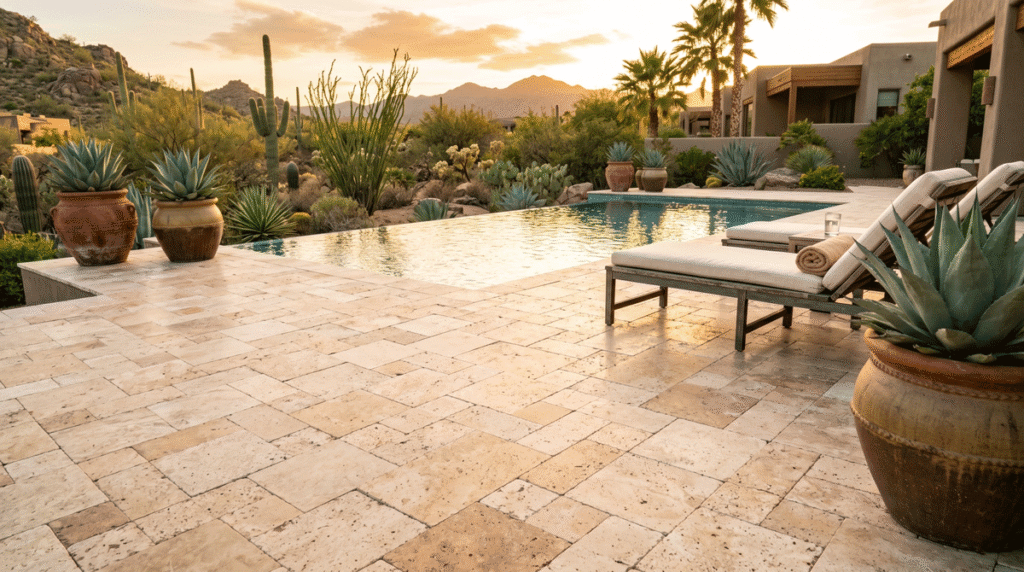
A paver that shifts can be releveled without affecting the surrounding surface. Travertine pavers are naturally lighter in color and stay meaningfully cooler than dark concrete.
Concrete pavers offer a wide range of options at a lower price point with similar durability advantages. Our Pool Deck Installation Phoenix page covers paver options and what typically goes into a complete deck project.
Stamped Concrete with UV-Resistant Sealers
Stamped concrete delivers customized appearance at a mid-range price point. Its performance in Arizona depends heavily on mix quality, adequate expansion joint placement, and the UV-resistance of the sealer applied. Properly executed stamped concrete can be attractive and durable.
The maintenance requirement of resealing every two to five years in Arizona conditions is ongoing and should be factored into total cost of ownership.
When to Replace Rather Than Repair
Pool decking that is cracked, uneven, or visibly deteriorated across its surface area is a safety concern before it is an aesthetic one. Surface cracks allow water infiltration and grow over time. Uneven sections create trip hazards.
Decking hot enough to limit outdoor use undermines the value of every other improvement made to the pool and yard.
Patching deteriorated decking incrementally typically costs more over five years than addressing it comprehensively. Each patch fails within a few years while the surrounding deck continues to age.
A full deck resurfacing or replacement, particularly when timed with other pool work to share mobilization costs, is almost always more cost-effective over any meaningful time horizon.
Arrowhead Deck and Pools works with Phoenix homeowners on pool deck replacement and resurfacing as part of broader pool renovation projects. Request a Free Estimate and we will assess your deck’s current condition honestly.
Planning a Pool Deck Project in Phoenix or Scottsdale
Pool deck projects are most efficient when coordinated with other pool work. If the pool is being drained for a resurface, that is the right time to also address the deck.
Mobilization costs are shared, disruption to the property is consolidated, and the design of the deck can be planned cohesively with the new interior finish and any other scope being included.
If the deck alone needs attention without a concurrent resurface, a standalone deck project is still straightforward.
The key decisions are whether to resurface the existing concrete with a cool deck system or replace it with pavers or new concrete, and what scope of sub-base work is needed if the existing deck has significant settlement or structural issues.
Arrowhead Deck and Pools: Pool Deck Specialists in Arizona Since 2008
Arrowhead Deck and Pools has been installing and resurfacing pool decks throughout Phoenix, Scottsdale, and Maricopa County since 2008. We work with cool deck systems, paver installations, and concrete replacement and can assess which approach makes the most sense for your pool’s specific situation.
If your deck is cracked, uneven, or unbearably hot and you want an honest assessment of your options and costs, Request a Free Estimate or call us at (855) 833-2525. We are glad to walk you through what your deck needs and what a realistic project would involve.
Frequently Asked Questions
What is the best pool deck material for Arizona heat?
Cool deck coatings and lighter-colored travertine pavers are the most commonly recommended choices for heat management in Phoenix. Cool deck products are specifically formulated to reflect heat rather than absorb it.
Travertine’s natural light color helps it stay cooler than darker materials in direct sun.
How long does a pool deck last in Arizona?
Quality cool deck coatings typically last 7 to 15 years before refinishing. Paver installations can last 20 to 30 years with proper maintenance. Standard concrete without adequate expansion joints or UV-resistant sealers may show significant deterioration within 8 to 12 years in Arizona conditions.
Why is my pool deck cracking in Phoenix?
The most common causes are thermal expansion and contraction from dramatic Arizona temperature swings, expansive soil movement especially after monsoon rains, inadequate expansion joint spacing in the original installation, or water infiltration through existing cracks that worsens sub-base stability over time.
Does pool deck replacement require a permit in Arizona?
Permit requirements vary by municipality and project scope. Significant deck replacement that affects drainage, setbacks, or structure typically requires a permit through the relevant city or county building department.
Your contractor should identify applicable requirements and handle permitting as part of the project.
Can I resurface my pool deck instead of replacing it?
If the underlying concrete is structurally sound and relatively level, cool deck resurfacing is a cost-effective way to refresh the surface and improve heat reflectivity without full replacement.
If the sub-base is compromised or the deck has significant settlement, a more comprehensive approach may be necessary.