

Arizona pool owners often notice that their surfaces deteriorate faster than expected, their water chemistry is harder to maintain, and their decking ages more visibly than they experienced elsewhere. This is not unusual, and it is not bad luck.
Phoenix pools operate in one of the most demanding environments in North America.
The combination of intense UV, extreme heat, hard water with high mineral content, high evaporation rates, and monsoon-driven soil movement creates stressors that simply do not exist in most other pool markets.
Understanding what these conditions do to your pool helps you make better decisions about maintenance, material selection, and timing.
How Arizona UV Affects Pool Interiors
Arizona receives some of the highest ultraviolet radiation levels in North America year-round. Sustained UV exposure degrades pool plaster over time, contributes to color fading in tinted finishes, and increases chemical demand by accelerating oxidation reactions in the water.
The effect is cumulative. Year-round intense sun shortens the lifespan of interior finishes compared to what is typical in lower-UV climates. Aggregate and pebble finishes, with harder material composition, hold up better than standard plaster under sustained UV exposure.
Finish selection decisions that are primarily aesthetic in other markets have measurable durability implications in Phoenix.
Heat and Water Temperature Effects
Arizona pools regularly reach 90 to 95 degrees Fahrenheit in summer without any heating. Chemically, warm water is more aggressive toward pool surfaces than cooler water.
Elevated temperatures accelerate the processes that drive scale formation and calcium carbonate precipitation, which are the primary mechanisms behind mineral buildup on tile, coping, and interior finishes.
Managing water chemistry in a hot Phoenix pool requires more frequent monitoring than most general maintenance guides recommend. Chemistry that is adequate to check weekly in spring may need testing two to three times per week in July and August.
Hard Water and Mineral Buildup in Phoenix Pools
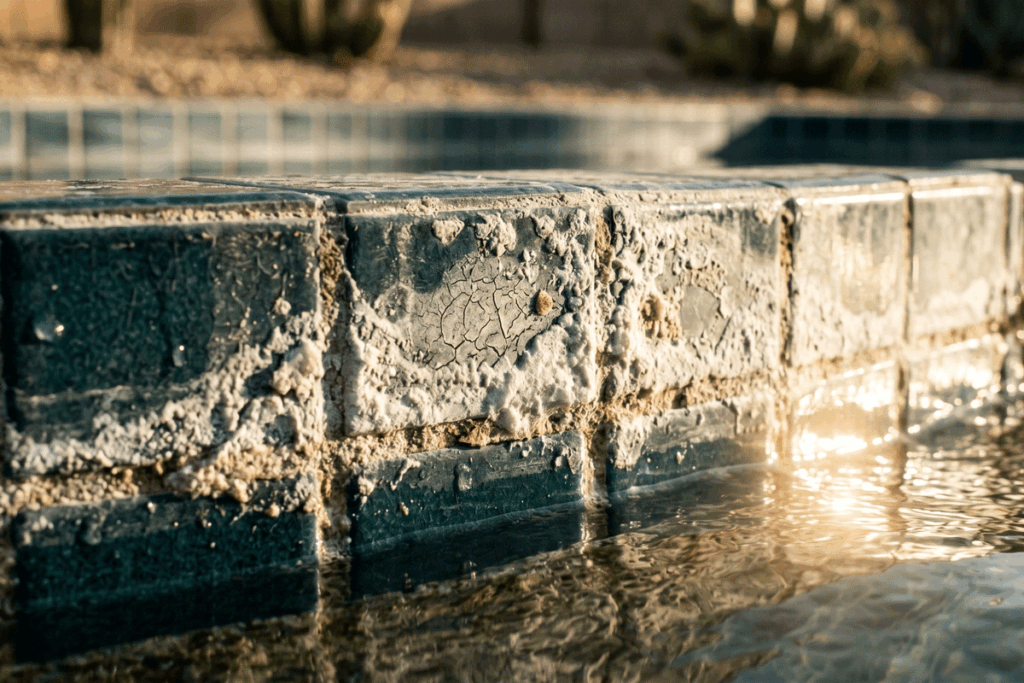
Phoenix-area tap water is naturally high in calcium and other dissolved minerals. As pool water evaporates, those minerals remain behind and concentrate in the pool over time. Unmanaged, high calcium hardness leads to scale deposits on the interior surface, waterline tile, coping, and equipment.
Scale accumulation etches and stains surfaces, provides a substrate for algae attachment, and is one of the most common sources of premature interior deterioration in Arizona pools.
Regular monitoring of calcium hardness and total dissolved solids, combined with periodic water dilution, is part of responsible pool ownership here in a way that does not apply as urgently in low-mineral markets.
The City of Phoenix Water Services publishes annual water quality reports that provide baseline mineral content data for local homeowners.
High Evaporation and Chemistry Concentration
The evaporation rate in Phoenix during summer can exceed half an inch of water per day. As water evaporates, dissolved minerals and chemicals remain and concentrate progressively.
Pool chemistry can shift significantly between weekly testing sessions in summer, which is why more frequent monitoring during peak season is not optional, it is standard practice for well-maintained Arizona pools.
Pools regularly need dilution with fresh fill water to prevent total dissolved solids from reaching levels that make proper chemistry management difficult. This also means the pool continuously receives more hard water from the tap, which adds to the mineral management challenge.
Monsoon Season and Pool Structures
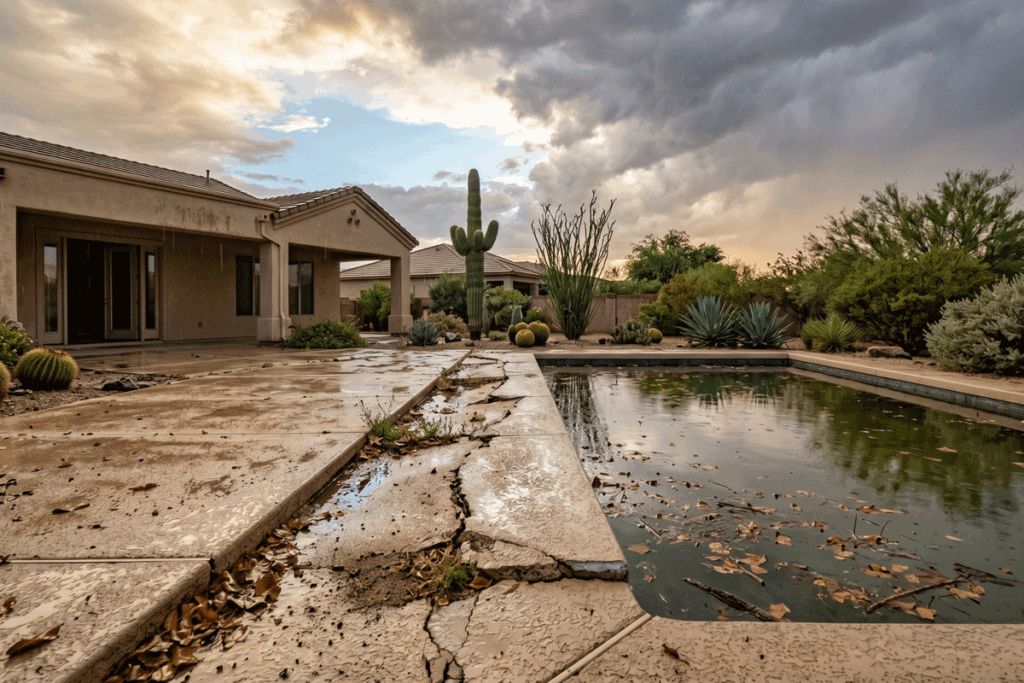
Arizona’s monsoon season brings rapid, heavy rainfall that dilutes pool chemicals, introduces debris, and rapidly saturates soil around pool structures. Expansive clay soils in many Phoenix-area neighborhoods swell when wet and shrink when dry.
This wet-dry cycling causes gradual ground movement that affects pool decks and, in more significant cases, pool structures.
Deck cracking or settling that appears or worsens after monsoon season is worth monitoring. Progressive cracking warrants professional evaluation. Our Pool Deck Installation Phoenix page covers the decking materials that hold up best against this pattern of movement.
Arizona-Specific Deck Heat Concerns
Standard concrete pool decks can exceed 150 degrees Fahrenheit in direct summer sun in Phoenix. This is not a theoretical concern. For families with children, a deck that cannot be walked on barefoot limits how the entire outdoor space gets used.
Materials designed for heat reflectivity, including cool deck systems, certain paver compositions, and textured concrete with appropriate sealers, address this problem directly. Deck material selection is a functional decision here, not just an aesthetic one.
Working With an Arizona-Experienced Contractor
Not all pool contractors bring the same depth of Arizona-specific experience. A contractor who has worked exclusively in this market understands how local water conditions, UV intensity, and temperature patterns affect specific materials and processes.
When evaluating contractors for a Phoenix pool project, asking how long they have worked in this market and what specific adjustments they make for Arizona conditions is a reasonable and revealing question.
Arrowhead Deck and Pools has been working in Phoenix and Scottsdale since 2008. We recommend materials based specifically on their proven performance in Arizona, not on national product literature. Request a Free Estimate to talk through your pool’s condition and options.
Material Selection for Arizona Pool Conditions
Choosing materials for a Phoenix pool requires thinking about Arizona-specific performance rather than relying on general product literature or national reviews.
A pebble finish that performs well in a moderate climate with low mineral water is even more appropriate for Arizona, where those characteristics matter more.
A cool deck product rated for high-traffic commercial use in the Southwest tells you something different than one designed for cooler, wetter climates.
Ask contractors specifically how long they have worked in the Phoenix market, which products they use for Arizona pools and why, and whether they have changed their material recommendations over time based on what they have seen perform in local conditions.
Experience in this specific market is not interchangeable with general pool industry experience.
Arrowhead Deck and Pools: Built for Arizona Since 2008
Arrowhead Deck and Pools has worked exclusively in the Phoenix and Scottsdale market since 2008. Every material recommendation we make is based on what we have seen perform in Arizona conditions over more than fifteen years of projects.
We understand how hard water, UV, extreme heat, and monsoon soil movement affect pools here in ways that are different from what you will read in general pool maintenance guides.
If you are concerned about how Arizona’s climate is affecting your pool and want a professional assessment, Request a Free Estimate or call us at (855) 833-2525. Our estimates are free and our assessments are honest.
Frequently Asked Questions
Why does pool plaster deteriorate faster in Arizona?
Arizona’s combination of hard water, high UV exposure, elevated water temperatures, and high evaporation rates all accelerate plaster wear compared to national averages. Each factor on its own is manageable.
Together, they shorten the typical plaster lifespan to 10 to 15 years, sometimes less without consistent chemistry management.
How does hard water affect pool surfaces in Phoenix?
Phoenix-area tap water is high in calcium and other minerals. As pool water evaporates, these minerals concentrate and eventually deposit as scale on interior surfaces, tile, and equipment.
Consistent monitoring of calcium hardness and total dissolved solids, combined with periodic dilution, is the most effective management approach.
How often should I test my pool water in Arizona?
During summer in Phoenix, testing two to three times per week is recommended. During cooler months, once per week is generally adequate. The high evaporation rate and warm water temperatures in summer can shift chemistry significantly between tests.
What pool deck materials stay coolest in Arizona summer?
Cool deck coatings and lighter-colored travertine or concrete pavers stay significantly cooler than standard concrete in direct sun. Cool deck products are specifically formulated for heat reflectivity. Travertine’s natural light color helps it stay cooler than darker materials.
How does monsoon season affect my pool in Phoenix?
Monsoon rains rapidly dilute pool chemicals and introduce debris that stresses filtration. The more significant concern for pool structures is rapid soil saturation.
Expansive clay soils common in Phoenix can shift as they go through rapid wet-dry cycles, which can crack or settle pool decks over time.