

A quality pool resurface in Phoenix or Scottsdale should last 15 to 25 years with a pebble finish, or 10 to 15 years with standard plaster. When a resurface starts showing visible problems within one to three years, it is not bad luck.
It is the predictable result of specific shortcuts that occur in a predictable set of places.
Understanding where pool resurfacing fails in Arizona helps you choose better contractors, ask more effective questions during the estimate process, and avoid paying for the same project twice.
Shortcut 1: Incomplete Surface Preparation
The most common cause of premature pool resurface failure in Arizona is incomplete surface preparation. Applying a new interior finish over residual old plaster, scale deposits, or contaminated shell produces a finish that is not fully bonded. The new surface looks fine at first.
Within two to three years, hollow spots develop where the finish has separated from the shell, and sections begin to delaminate and flake.
This shortcut reduces labor hours without being visible to the homeowner during the estimate process. The only protection is asking specific questions about prep methodology and timeline before signing a contract.
A contractor who completes prep on a full-size pool in a few hours is not doing the work correctly.
Shortcut 2: Skipped or Superficial Crack Repair
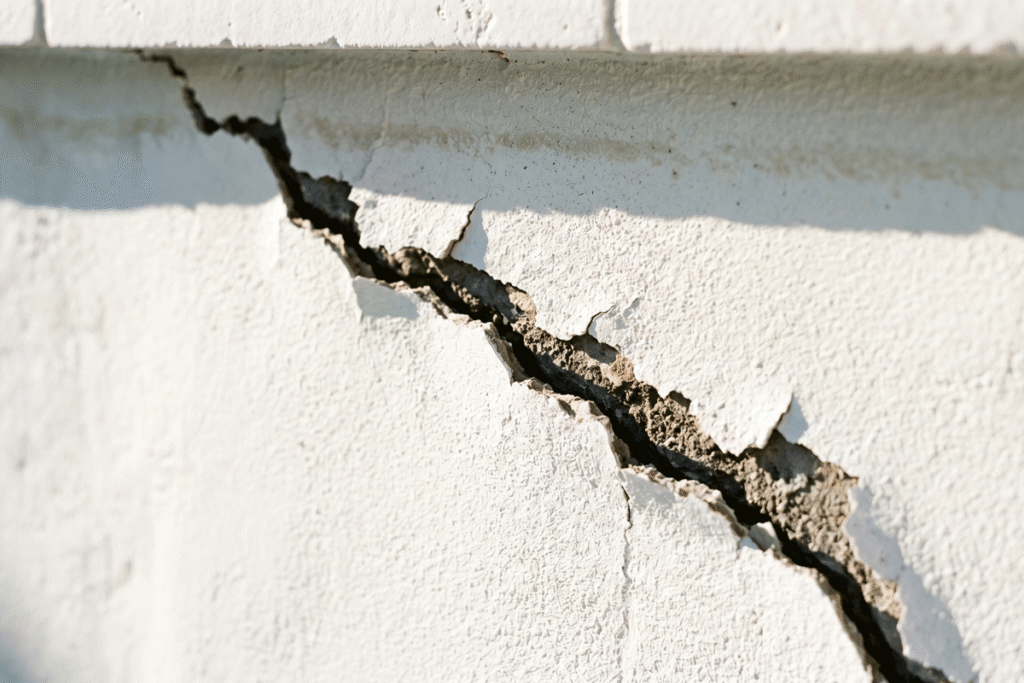
Active cracks in the pool shell need to be properly addressed before any new finish is applied.
Contractors under schedule or price pressure sometimes apply filler at the surface without cleaning and chasing the crack to its full depth, or apply new finish directly over active cracks without any repair.
Active cracks continue to move. The new finish applied over them will crack in the same location, typically more visibly than the original, and with delamination developing around the crack line. The new surface has made the problem worse by hiding it temporarily.
Shortcut 3: Lower-Grade or Mismixed Materials
Pool interior finish quality varies significantly across product lines. When a contractor quotes a quality aggregate product and substitutes a lower-grade material without the homeowner’s knowledge, the finish underperforms. Mix ratios also matter.
Plaster mixed too wet is easier and faster to apply but produces a softer, more porous surface that deteriorates faster in Arizona’s demanding water chemistry environment.
These decisions happen on the job site and are invisible in the finished pool. Requiring contractors to specify materials by name, as discussed on our Pool Resurfacing Phoenix page, is the most practical protection.
Shortcut 4: Neglected Startup Chemistry
The first 28 days after application are critical. Startup chemistry management during this period directly determines the hardness and density of the cured surface. Some contractors complete application, collect payment, and leave startup entirely to the homeowner with minimal guidance.
When startup chemistry runs outside appropriate ranges, the plaster cures softer than it should. A softly cured surface is more porous, more susceptible to staining, and wears faster for its entire service life. This is not correctable after the fact. The curing period is a one-time window.
Shortcut 5: Undersized or Mismatched Equipment
Pool equipment must be sized and configured for the pool’s volume and plumbing. When equipment is undersized or components are mismatched, water circulation and filtration suffer. Inadequate circulation leads to chemistry imbalances that accelerate surface deterioration.
What looks like a finish problem years later may actually trace back to an equipment system that never performed correctly.
Variable-speed pump rebates through the APS pool pump rebate program make proper equipment upgrades more accessible and are worth factoring into remodel scope decisions.
Red Flags During the Estimate Process
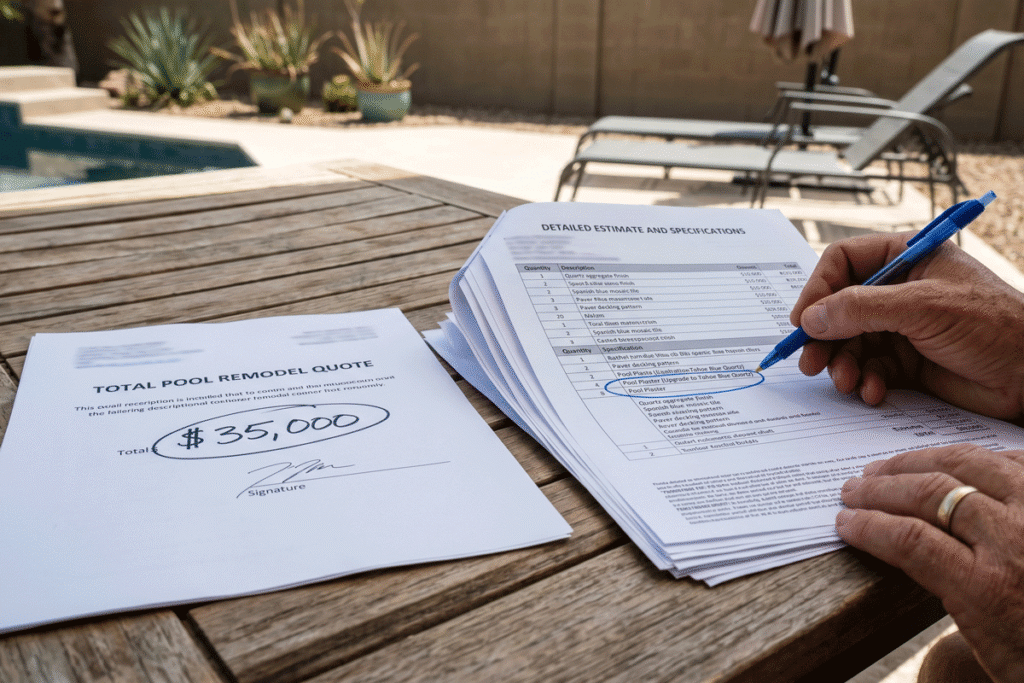
Certain signals during the estimate process warrant closer examination. An estimate that provides only a total price with no line items or scope description makes accountability impossible.
Pressure to sign quickly or pay a large upfront deposit before work begins can indicate cash flow issues. Reluctance to provide references from similar recent projects limits your ability to evaluate actual performance.
A contractor who reacts defensively to reasonable questions about process, materials, or references is giving you important information about what working with them will be like if something goes wrong.
How to Protect Yourself
The most effective protections are available before any work begins. Ask detailed questions about the preparation process, crack repair methodology, and specific materials being used. Get the answers in writing as part of the contract.
Verify the contractor’s Arizona ROC license status at Arizona Registrar of Contractors before signing.
At Arrowhead Deck and Pools, we have worked in the Phoenix and Scottsdale market since 2008. Our estimates are detailed because homeowners should know exactly what they are paying for.
If you have had a previous resurface that did not hold up and want to understand what went wrong and what we would do differently, Request a Free Estimate and we will be straightforward with you.
The Value of Arizona-Specific Contractor Experience
Pool contractors who have worked primarily in Phoenix and Scottsdale bring specific knowledge to material selection, startup chemistry, and long-term performance that general contractors or newer market entrants may not have developed.
Arizona’s hard water, high UV, extreme temperatures, and monsoon soil conditions create a specific set of challenges that experienced local contractors have encountered and adapted to over years of projects.
Asking how long a contractor has been working in this specific market, and how many projects similar to yours they have completed in similar conditions, is a reasonable part of evaluating whether their experience matches what your project needs.
Arrowhead Deck and Pools: Doing It Right Since 2008
Arrowhead Deck and Pools has worked in the Phoenix and Scottsdale pool market since 2008. We have built our business on doing the foundational work correctly, particularly the preparation work that does not show in finished photos but determines the outcome of every project.
Our estimates are detailed because homeowners who understand what they are paying for make better decisions. Our prep process is thorough because the long-term result depends on it.
Our startup protocol is managed carefully because the first 28 days after application matter as much as the application itself.
If you have had a previous pool resurface that did not hold up and want to understand what went wrong, or if you are starting fresh and want to do it right the first time, Request a Free Estimate or call us at (855) 833-2525. We are glad to give you an honest assessment.
Frequently Asked Questions
Why did my pool resurfacing fail so quickly?
Premature pool resurface failure in Arizona almost always traces back to inadequate surface preparation, incorrect startup chemistry, or substituted lower-grade materials. Any of these can cause visible failure within one to three years regardless of what finish material was used.
What recourse do I have if a pool resurface fails prematurely in Arizona?
Start with the contractor and any warranty documentation you received. If the contractor is unresponsive or no longer operating, the Arizona Registrar of Contractors has a recovery fund and complaint process for homeowners who experience contractor failures on licensed work.
How soon should I see problems if pool resurfacing prep was done wrong?
Startup chemistry problems can appear within weeks as surface anomalies or unusual staining. Delamination from inadequate preparation typically takes one to three years to become obvious as hollow spots or flaking sections.
Can a failed pool resurface be partially repaired?
Small, isolated delaminated areas can sometimes be patched. Widespread delamination or finish failure typically requires a complete redo of the interior surface, effectively paying for the project a second time.
How do I find a reputable pool resurfacing contractor in Phoenix?
Verify ROC licensing at roc.az.gov, ask for references from similar recent projects and follow up on them, request itemized estimates that specify materials by name, and ask specific questions about prep methodology.
A contractor who engages directly with these questions is operating differently than one who provides only a price.